

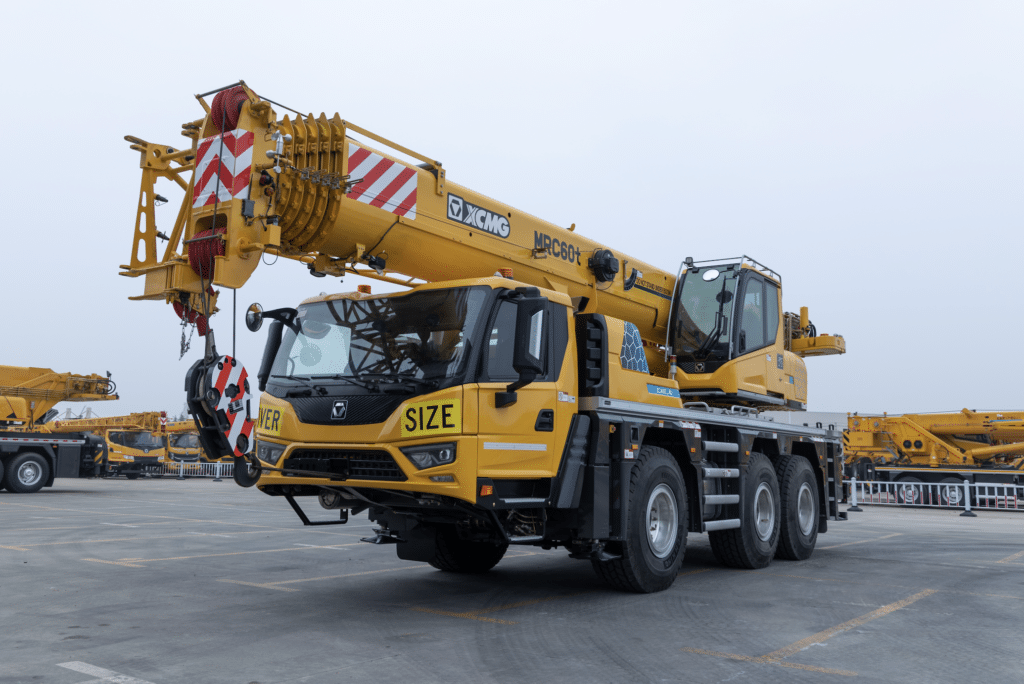
Cranes in the 60–90 tonne class handle the lifts most marine, civils and infrastructure schemes actually make: beams, precast units, pontoons, plant and structural steel. A safe lift is a system: the machine, the lift plan, the ground assessment, and the outrigger pads and cribbing beneath it, all have to agree. EMIS coordinates that system on request through trusted hire partners, subject to availability, so the crane arrives with its certification, its pads and its plan aligned rather than assembled on the morning of the lift.
The 60–90 tonne class sits at the working heart of the crane market: large enough for structural steel, precast bridge units, quayside equipment and marine plant, compact enough to travel and set up without the cost and road planning of the very largest machines. Mobile cranes bring speed between positions; crawler cranes trade that for the ability to travel loaded and stand on lower ground pressures.
What makes a lift safe is never the crane alone. The appointed person's lift plan sets the radius, the load and the configuration; the ground assessment says what the standing can carry; and outrigger pads and cribbing spread the machine's imposed loads into ground that can take them. A crane that arrives without matched pads, or before the ground has been proven, does not lift, it waits, on hire, while the gaps are closed.
EMIS coordinates the whole arrangement. We take the load schedule, site constraints and programme, source the crane from a vetted partner with current examination and test certification, and coordinate the outrigger pads, mats and cribbing alongside it, with the lift planning interface managed so the machine, the paperwork and the platform are ready on the same morning. Contract lift or crane-only arrangements are matched to how your team is resourced.

The project types and sectors this category most often serves.
Placing pontoons, fenders and marine plant means lifting over water inside tidal windows. EMIS coordinates crane, pads and programme to the marine calendar so the lift happens when the tide allows.
Beam and precast erection needs the crane, lift plan and possession aligned to the hour. We coordinate the crane package to the possession programme with certification ready in advance.
Treatment works and substation equipment arrives on transport and must go straight to position. EMIS coordinates delivery and crane so the lift meets the load, not the other way round.
Steel frames need consistent crane capacity across an erection sequence. We coordinate crane class, standing positions and pads to the erection method statement.
Vetting, specification and lead-time coordination, handled before the product reaches your site.
Outrigger pads, mats and cribbing are specified to the imposed loads and ground assessment and delivered with the crane, the platform is never an afterthought.
Examination reports, test certificates and insurance are verified from trusted hire partners in advance, so the paperwork is ready before the machine leaves the depot.
Crane, lift planning interface, pads and delivery timing run through one accountable contact, aligned to the possession or tidal window, not assembled on the morning.
Typical performance characteristics, full specifications are provided at quotation.
| Capacity class | 60–90 tonne mobile and crawler cranes |
|---|---|
| Typical duties | Structural steel, precast units, marine plant and equipment installation |
| Arrangements | Contract lift or crane-only, matched to the client's appointed person arrangements |
| Supporting equipment | Outrigger pads, crane mats and cribbing specified to the ground assessment |
See the typical requirements we support, the challenges we help manage, and the ten-step process behind every engagement.
Tell us the requirement and the programme. You will get a specified, priced package from one accountable contact, with the category already selected on the form.
We respond to all enquiries within one business day.