

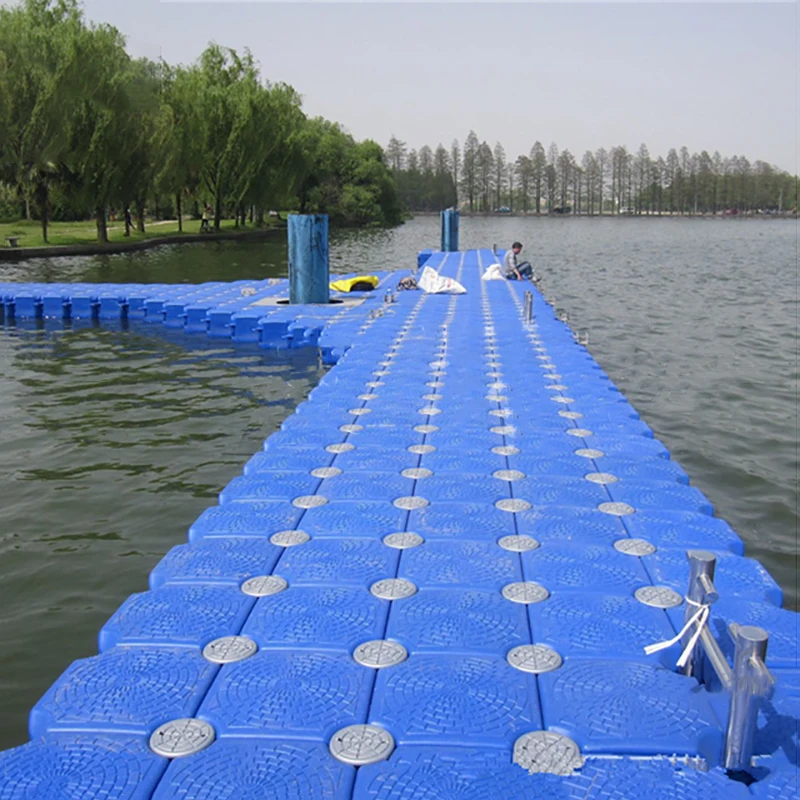
Floating pontoons and floating docks put a stable working surface on the water: modular pontoon systems for access and moorings, work pontoons that carry plant and materials over water, and floating dock arrangements for berthing, boarding and small-craft operations. EMIS sources and coordinates these systems through an approved global manufacturer network, specified to the water levels, exposure and loading the scheme will actually see, then delivered through trusted logistics partners.
A floating pontoon is a buoyant modular platform, typically polyethylene, concrete or steel, connected into walkways, berths, work platforms or complete floating docks, and held on station by piles, anchors or mooring arrangements. Because the system floats, it rides tidal range and river level changes that would strand a fixed structure, which is why pontoons carry so much of the access, mooring and light-works duty on marinas, rivers, reservoirs and harbours.
Specification starts from the water and the duty: the freeboard and buoyancy the loads require, the wave climate and wash exposure, the mooring arrangement the bed and range allow, and the fittings, gangways, fenders, services, cleats, the operation needs. A pontoon system specified one duty class too light moves underfoot, ships water and shortens its own life; one specified correctly is a working surface the site forgets about.
EMIS coordinates the supply through approved pontoon and floating-dock manufacturers, helps establish the duty specification from the method statement or operator's requirement, coordinates quotations, and arranges delivery, and where required, staged installation support, through trusted logistics partners. Material and buoyancy documentation travels with the system, ready for the harbour master or principal contractor.
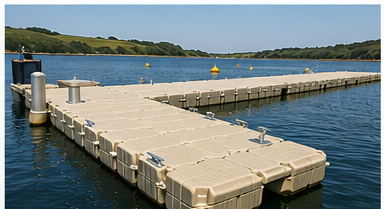
The project types and sectors this category most often serves.
Waterfront works need safe access between shore, plant and vessels. Modular pontoons with gangways and handrails are specified to the tidal range and crossing duty, and delivered as one coordinated package.
Quay, outfall and bridge works need buoyant working platforms that carry tools, materials and small plant. EMIS specifies the module class to the imposed loads and coordinates the mooring arrangement with the works.
Harbours, marinas and operators need berthing and boarding arrangements that follow the water level. Floating dock systems are sourced to the vessel mix and exposure with fendering and services coordinated.
Utilities and environmental schemes need pontoon access over reservoirs and rivers for sampling, maintenance and instrumentation. We specify systems for the level range and coordinate delivery to restricted sites.
Vetting, specification and lead-time coordination, handled before the product reaches your site.
Freeboard, buoyancy, exposure and mooring arrangement are established first, so the system that arrives matches the duty rather than a catalogue page.
Pontoon and floating-dock systems are sourced through approved manufacturers in the UK and overseas, availability and commercial terms are compared for you.
Module transport, offload and delivery sequencing are coordinated to the works programme, with documentation attached at handover.
Typical characteristics, full specifications are provided at quotation.
| System types | Modular pontoons, work pontoons, floating docks and walkways |
|---|---|
| Typical materials | Polyethylene, concrete and steel modules with timber or GRP decking |
| Station keeping | Piled, anchored or moored arrangements to suit bed and range |
| Fittings | Gangways, handrails, fendering, cleats and service channels |
See the typical requirements we support, the challenges we help manage, and the ten-step process behind every engagement.
Tell us the requirement and the programme. You will get a specified, priced package from one accountable contact, with the category already selected on the form.
We respond to all enquiries within one business day.