

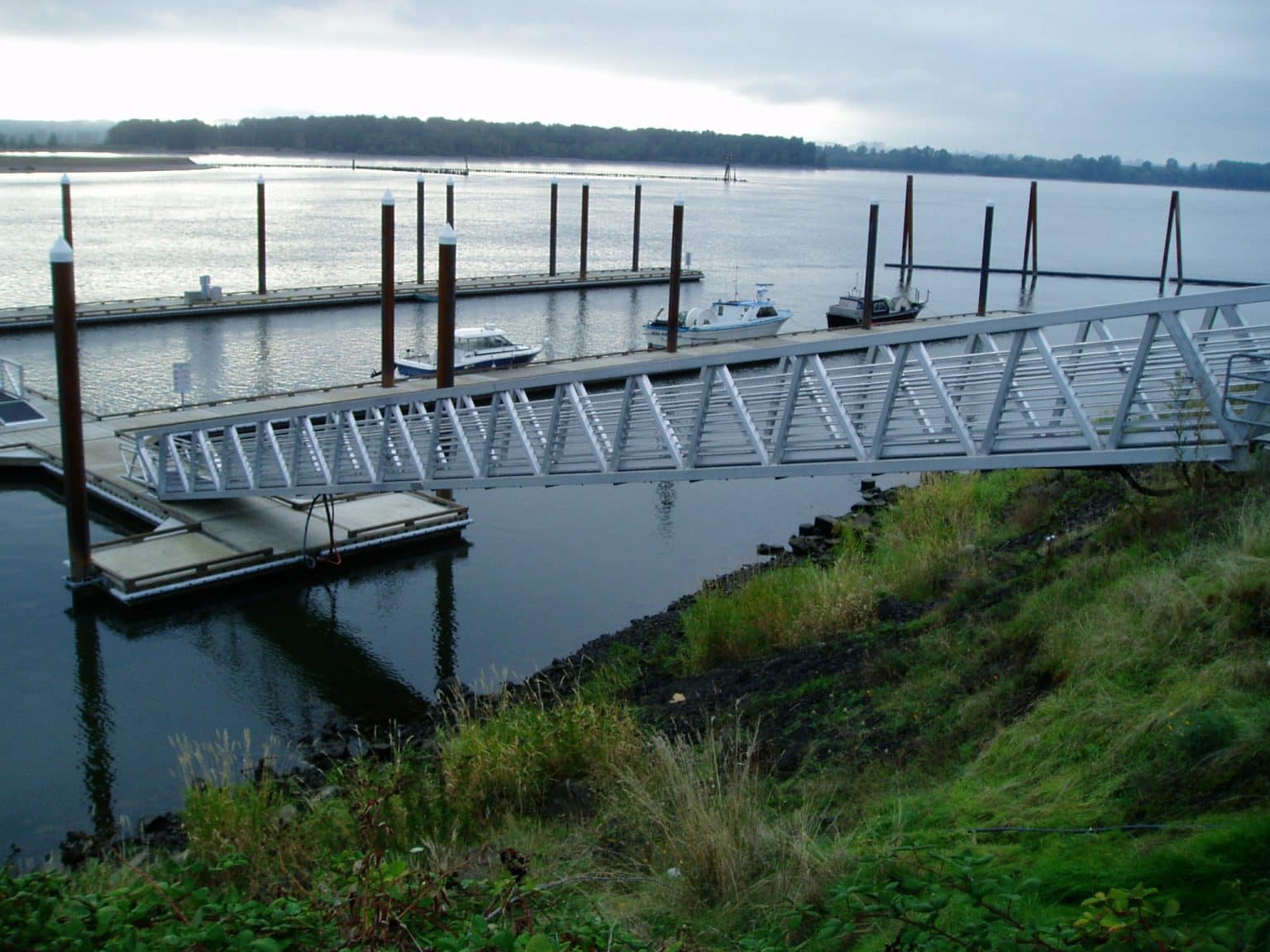
Marine access systems and gangways are how people move safely between shore, structure and vessel: aluminium gangways and brows onto pontoons and vessels, linkspan and ramp arrangements that follow the tide, and the handrails, mesh decks and lighting that make the crossing safe in working conditions. EMIS sources and coordinates these systems through approved manufacturers, specified to the span, imposed loads and tidal geometry of the berth.
An access gangway looks simple until it is specified: the span has to reach at the lowest water level and not over-steepen at the highest; the imposed load has to cover the crew, tools and stretcher case the operation may put on it; and the bearing arrangement has to roll or articulate as the pontoon or vessel moves. Aluminium construction keeps handling weight down for what is often a craned or manually repositioned item, while guardrails, self-draining decks and non-slip surfaces do the everyday safety work.
Beyond the standard gangway sit the engineered arrangements: brows for vessel boarding, linkspans and articulated ramps for vehicle and heavy pedestrian duty, and bespoke access steelwork where a berth's geometry demands it. Each is a designed item with load ratings and test documentation that the harbour authority or principal contractor will expect to see.
EMIS coordinates the supply through approved access-system manufacturers, working from the berth geometry, tidal data and operational duty to a specification the market can price accurately. Quotations are compared like for like, delivery is arranged through trusted logistics partners, and the load-rating and test documentation arrives with the equipment.
The project types and sectors this category most often serves.
Marinas, harbours and work berths need gangways matched to the tidal range and crossing duty. EMIS specifies span, width and loading and coordinates supply with the pontoon package where there is one.
Crew transfer and vessel maintenance need brows rated and fitted for the freeboard difference and movement between vessel and berth, with the certification the operator's safety case expects.
Over-water construction needs temporary access arrangements that satisfy the principal contractor's safe-access plan. We source rated systems with documentation held ready for sign-off.
Asset owners need permanent access arrangements, steps, ladders, platforms and gangways, sourced to the asset's geometry and inspection regime, with materials specified for the marine environment.
Vetting, specification and lead-time coordination, handled before the product reaches your site.
Span, gradient limits, imposed loads and bearing movement are established from the tidal data and duty before the market is approached, no near-right access equipment.
Load ratings and test documentation are supplied with the equipment, ready for the harbour authority, operator or principal contractor.
Where access forms part of a pontoon or berth package, gangways and fittings are coordinated into the same supply, one specification, one delivery programme.
See the typical requirements we support, the challenges we help manage, and the ten-step process behind every engagement.
Tell us the requirement and the programme. You will get a specified, priced package from one accountable contact, with the category already selected on the form.
We respond to all enquiries within one business day.