

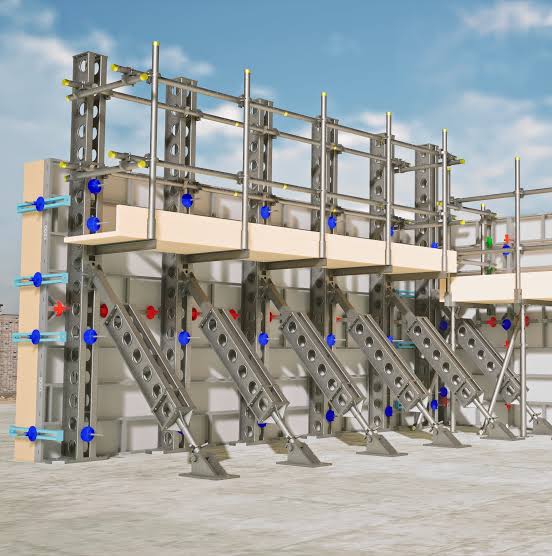
Temporary works equipment holds the ground and the structure safe while the permanent works are built: props and shoring for excavations, falsework under wet concrete, trench boxes for utility runs, and cribbing blocks under heavy loads. Every item must satisfy a temporary works design and its independent check, so EMIS sources exactly what the design specifies, with the load ratings and test certificates the coordinator needs for sign-off.
Temporary works are the structures a project uses but never hands over. Hydraulic and mechanical props resist the ground pushing into an excavation; shoring systems support faces that cannot stand unsupported; falsework carries the weight of concrete until it can carry itself; trench boxes protect operatives in utility excavations; and cribbing blocks spread concentrated loads from jacking, storage or plant into the ground.
None of this is picked from a hire catalogue by eye. Each system is called for by a temporary works design with stated capacities, arrangements and materials, and that design is independently checked. Substituting a near-equivalent prop or an unrated block can invalidate the design, which is why the temporary works coordinator will not permit works until the equipment on site matches the paperwork.
EMIS sources against the design, not around it. We take the temporary works drawings and schedule, source the specified systems from a vetted equipment network, and hold the load ratings, test certificates and technical data ready so the coordinator can permit the works without chasing evidence. One contact holds the package, so one design is reconciled against one delivery rather than several suppliers' paperwork.

The project types and sectors this category most often serves.
Basement and shaft excavations need hydraulic propping and shoring certified to the ground and load case. EMIS sources the system the design specifies and delivers it to the excavation sequence.
Utility contractors running pipe and cable trenches need trench boxes and edge protection matched to depth and ground. We coordinate supply so protection is on site before the first dig, not after it.
Bridge decks and suspended slabs stand on falsework rated to the pour geometry and sequence. EMIS sources falsework to the design with the certification the checker requires.
Jacking, bridge bearing replacement and heavy storage need cribbing blocks with a known, certified capacity. We source rated cribbing so concentrated loads stand on documented capacity.
Vetting, specification and lead-time coordination, handled before the product reaches your site.
Equipment is sourced to the temporary works design and its independent check, capacities, arrangements and materials as drawn, with no near-substitutes that could invalidate the design.
Load ratings, test certificates and technical data are held ready for the temporary works coordinator, so the works can be permitted on schedule rather than stalled for paperwork.
Props, shoring, falsework, boxes and cribbing arrive through one accountable contact, the coordinator reconciles one delivery against one design, not five suppliers' terms and certificates.
See the typical requirements we support, the challenges we help manage, and the ten-step process behind every engagement.
Tell us the requirement and the programme. You will get a specified, priced package from one accountable contact, with the category already selected on the form.
We respond to all enquiries within one business day.