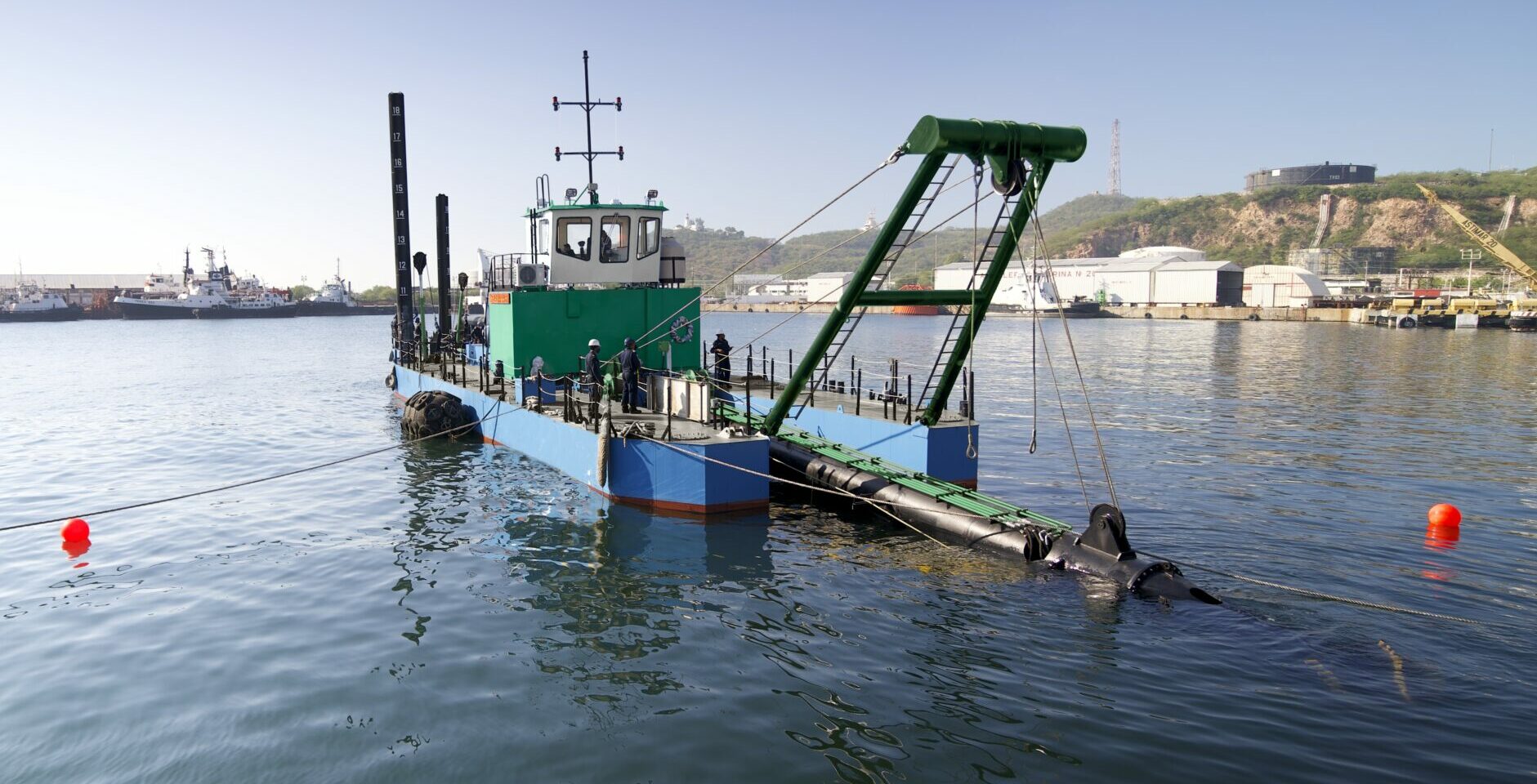
The most common objection we hear is fair: why use an intermediary when you can buy direct? The honest answer is that direct buying works until the moment a specialist package spans six suppliers, three lead times and one framework audit. Here is where a single accountable contact earns its place.
The most common question a marine procurement partner is asked is also the most reasonable one: why not go direct to the supplier? If you know the manufacturer, hold the account and understand the equipment, an intermediary looks like a margin you do not need. For a single item from a single source, it often is. This article is about the cases where it is not, and about being specific rather than defensive about the difference.
Direct procurement scales badly along two axes: the number of suppliers involved and the amount of technical judgement required to specify correctly. A mooring package for a tidal quay is rarely one purchase order. It is chain, shackles, buoys, connectors, anodes and the certification that ties them together, frequently from four or five vendors, each with its own lead time, minimum order and documentation standard. Coordinating that is a job. When it is bolted onto an engineer's existing workload, it becomes the task that slips.
The second axis is specification risk. Buying direct assumes you have already made every correct technical decision. If the specification is wrong, the wrong grade of steel for the exposure class, a survey instrument without the required accuracy class, a pump curve that does not match the duty, the supplier will still fulfil the order exactly as written. Direct buying transfers no specification risk. It simply delivers the mistake faster.
Accountability is the product. When a package is sourced through one partner, there is one person who owns the whole line, not the crane, not the mooring, not the survey kit, but the outcome. That matters most when something goes wrong, because things do. A delayed anode shipment that would have stalled an installation window is the partner's problem to solve, not a three-way email chain between client, main contractor and vendor where everyone is technically correct and nothing moves.
Concretely, a single point of contact absorbs the following work so the project team does not have to:
An intermediary has to be paid, so the fair test is whether the coordination it provides costs less than the coordination you would otherwise absorb, including the cost of the things that go wrong. On a simple order it usually does not, and we will say so. On a multi-supplier specialist package with a fixed installation window, the arithmetic changes. One missed lead time on a marine spread can cost more in standby and re-mobilisation than the entire coordination fee. The partner is not selling a discount on the equipment. It is selling the removal of a category of risk that direct buying leaves on your desk.
The value is not that we buy the equipment. It is that when the schedule is under pressure, there is one accountable contact who already knows the specification, the suppliers and the programme.
A procurement intermediary without sector knowledge is just a reseller adding cost. The distinction that earns the role is technical: understanding why a splash-zone component needs a different coating specification from a fully submerged one, why a survey instrument's stated accuracy is meaningless without its measurement conditions, why a dredging pipeline's wall thickness is a function of the material being pumped and not just the bore. That knowledge is what lets a partner catch a specification error before it becomes a delivered mistake. It is the difference between coordinating orders and coordinating outcomes.
This is also why a vetted network matters more than a long list of suppliers. Anyone can find vendors. The value is in knowing which ones hold the certifications they claim, which ones honour quoted lead times under pressure, and which ones have delivered the specific class of equipment your project needs. Vetting is accumulated evidence, and it is not transferable to a client buying direct for the first time on a given category.
The decision is not ideological, buy direct where it is genuinely simpler, and consolidate where coordination risk is real. Use a single point of contact when a package crosses multiple suppliers, when specification error carries real downstream cost, when the delivery has to hit a fixed installation window, or when the audit trail has to survive scrutiny. Buy direct when it is a single known item from a single trusted source and nothing about it is on the critical path.
On the tidal quay refurbishment at Southampton, the package was firmly in the first category: a marine equipment spread spanning mooring, protection and lifting components against a tidal working window that did not move. The value of a single accountable contact there was not theoretical. It was the reason the installation held its date.
If you are weighing this decision on a live package, the sensible next step is a specification review before any order is placed. That is where most avoidable cost is either created or prevented, and it is the point at which a technically-informed partner is worth most.
Related services
See the typical requirements we support, the challenges we help manage, and the ten-step process behind every engagement.
Whether you require specialist products, technical procurement support, supplier evaluation, coordinated plant and equipment hire, logistics or full commercial procurement management, EMIS provides one accountable point of contact from initial requirement through to final delivery and close-out.
We respond to all enquiries within one business day.